
 EN
EN
 ar
ar bg
bg hr
hr cs
cs da
da nl
nl fi
fi fr
fr de
de el
el hi
hi it
it ko
ko no
no pl
pl pt
pt ro
ro ru
ru es
es sv
sv tl
tl iw
iw id
id lv
lv lt
lt sr
sr sk
sk sl
sl uk
uk vi
vi et
et hu
hu th
th tr
tr fa
fa ms
ms hy
hy ka
ka ur
ur bn
bn mn
mn ta
ta kk
kk uz
uz ku
ku
NB-IoT DTU
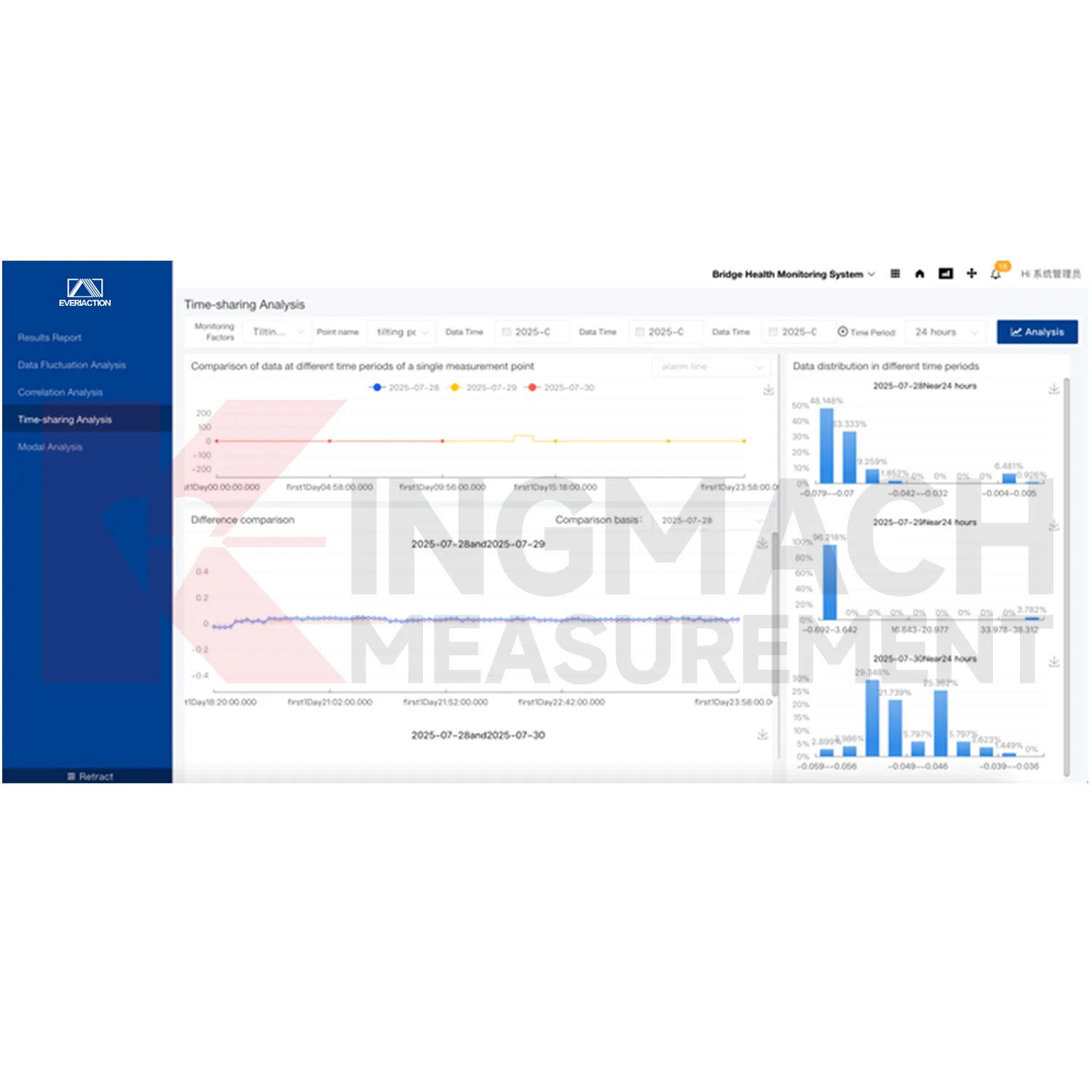
Flexible alarm rule configuration is a key feature of Kingmach NB-IoT DTU. The platform can provide matching detailed fault information in real time when a structure fails or when monitoring logic identifies abnormal behavior. Alarm rules can be linked with project alarm levels, channel data, and maintenance needs. This helps users avoid treating every data movement the same way. A minor drift, a rapid jump, and a confirmed multi-channel abnormal pattern can be managed with different levels of attention.
Application of NB-IoT DTU
Wind tower monitoring uses Kingmach NB-IoT DTU to combine tower tilt, vibration, foundation behavior, strain, wind, temperature, and maintenance records. A tower may respond differently under high wind, temperature change, operation state, and foundation conditions. The platform can visualize trends and preserve event history so reviewers can compare repeated behavior under similar conditions. Alarm configuration helps identify readings that need field inspection without treating every normal operating fluctuation as a fault.
The future of NB-IoT DTU
Future use of Kingmach NB-IoT DTU will grow as civil engineering monitoring moves from isolated instrument readings to connected asset management. More structures will rely on sensors, acquisition modules, wireless devices, and cloud platforms to maintain a continuous safety record. The software layer will become the place where owners review not just one reading, but the relationship between trends, alarms, inspections, weather, construction, and maintenance work. A platform that integrates multiple data sources will be central to that shift.
Care & Maintenance of NB-IoT DTU
After software updates or configuration changes, Kingmach NB-IoT DTU should be checked with a short acceptance routine. Confirm device connections, data storage, trend display, alarm rules, report generation, user access, and project document links. Compare a few channels with field records or acquisition device values to make sure nothing shifted during the update. Record the date, change type, user, and verification result. This keeps platform maintenance visible in the project history.
Kingmach NB-IoT DTU
Kingmach NB-IoT DTU also matters at handover, when the owner needs a platform that staff can operate after installation teams leave. The product page lists GB50982-2014 certification and instant delivery for the Monitoring system software platform. More importantly, the operating file should show project names, device access, account roles, alarm settings, display pages, report paths, and recent data quality. When those items are prepared clearly, the software does more than display readings; it gives the owner a repeatable daily routine for checking structural status and preserving evidence.
FAQ
Q: How should a project be prepared?
A: Define asset folders, monitoring zones, measuring points, units, alert grades, and report needs before launch.
Q: What should be tested at go-live?
A: Test incoming values, time order, engineering units, graph refresh, alarm trigger, and export output.
Q: Why does alarm logic need review?
A: Different sensor categories and risk levels may need different limits, rates, and escalation steps.
Q: How should files stay current?
A: Update drawings, point lists, photos, inspection notes, maintenance logs, and reports when the site changes.
Q: What should follow a platform update?
A: Run a short acceptance check on live values, graph pages, alerts, exports, accounts, and stored files.
Reviews
James Thompson
The tiltmeters and accelerometers are very sensitive and provide precise data. Perfect for our structural health monitoring system.
Christopher Martinez
Very satisfied with the readouts & data loggers. User-friendly interface and supports multiple sensor inputs.
Latest Inquiries
To protect the privacy of our buyers, only public service email domains like Gmail, Yahoo, and MSN will be displayed. Additionally, only a limited portion of the inquiry content will be shown.
Sophia***@gmail.comUnited Kingdom
Good day, we need environmental monitoring sensors including temperature, humidity, and wind sensors...
Isabella***@gmail.comGermany
Hello, we are evaluating weir flow meters for a water management project. Please share accuracy deta...